
By Scott Burg
Rockman et al Cooperative
Bridges to Bioengineering is a collaborative project between the Ithaca Sciencenter, faculty and students from Cornell University’s Meinig School of Biomedical Engineering (Cornell BME), and the spectrUM Discovery Area/Museum in Missoula Montana. The project is funded through the National Institutes of Health Science Education Partnership Award (SEPA) program. The project contracted with Rockman et al Cooperative (www.rockman.com; REA) a national research and evaluation firm to serve as the project’s external evaluator.
Bridges to Bioengineering will be a 1,500 square-foot bilingual (Spanish/English) traveling exhibition with supporting activities that foster an understanding of biomedical engineering (BME) and the innovative ways that it is used to address issues in medicine and public health. This unique co-development approach immerses Sciencenter staff in BME content while directly involving Cornell BME graduate students into the exhibit design and evaluation process. This structure helps to connect the exhibit with ongoing research while strengthening the Cornell graduate students’ ability to better communicate with museum and general audiences. The exhibit is targeted to youth ages 6–12 and their families at museums nationally, with an emphasis on reaching people in rural communities.
The project’s second graduate student cohort completed their work December 2025. As part of the project’s ongoing learning and evaluation process, we interviewed students from the second cohort to capture their motivations, reflections and experiences over the past program year. Interviews were conducted over Zoom by the project evaluator in January 2026.
Motivation
Across all three interviews, the BME graduate students articulated strong intrinsic motivations for joining the project that aligned closely with the program’s broader goals. Each described an interest in translating biomedical engineering concepts to non-expert audiences, particularly children and families, and viewed the science center context as a rare opportunity to engage learners outside formal educational settings. The students contrasted the museum environment with traditional academic spaces, noting that graduate training typically emphasizes communication with disciplinary peers rather than with lay audiences. The Building the Bridges project, by contrast, required them to rethink how biomedical engineering could be communicated in ways that were intuitive, engaging, and meaningful to visitors with widely varying ages and backgrounds. The project also helped to demystify the exhibit design and development process.
I think it was really exciting to have the opportunity to work on a project that was aimed to that eight to 12-year-old range, which is a pretty formative period in kids’ lives, when they’re getting excited about things. It was also fun to get the opportunity to take research and take engineering and do something that was more sort of playful and fun and geared toward kids.
I’ve been to museums but I never really considered that someone has to build these exhibits, I’ve never really thought of how the process works. I thought this process would be cool to work here and figure out how all these things like come together, how do you actually make an exhibit out of an idea?
Another central motivating factor was the desire to introduce engineering to children earlier and in ways that feel inviting rather than intimidating. Several participants reflected that they did not have a clear understanding of what engineering, and biomedical engineering in particular, involved until late in their undergraduate studies. This retrospective awareness shaped a strong commitment to helping younger learners encounter engineering before academic or cultural barriers could narrow their sense of what was possible or knowable. The museum setting, and its emphasis on informal, self-directed exploration, was seen as especially well-suited to this goal because it allows children to engage without the pressures of grades, assessment, or judgement.
I don’t think I knew what engineering was until I started college really, or was well into college, and so I thought it would be pretty cool to be able to show young students that this is something that they can do and can be interested in. Having it be outside of a classroom setting was pretty exciting as well to have more of an informal environment in which to learn.
Translating research to design
Participants shared a desire to engage in a different mode of engineering practice, one that emphasized hands-on making, design iteration, and user experience rather than experimental rigor or professional publication outcomes and dissemination. This shift was repeatedly described as refreshing but also challenging. While all three students were confident in their research expertise, they initially felt uncertain about how to design and fabricate interactive exhibits for children. This sense of uncertainty was not framed negatively but rather, it marked the starting point of a significant learning trajectory that unfolded over the course of the year.
I definitely remember feeling like, I don’t know what I’m doing, I don’t know how to build exhibits! Whoa, this is kind of outside my wheelhouse. I know how to do research. I know how to talk about research. I don’t really know how to make a fun, cool thing for kids to interact with. There was definitely a lot of just figuring out what that meant and what would a good way to approach it.
The students onboarding experience with Sciencenter staff, design consultants and members of the outgoing graduate cohort, played an important role in helping to shape learning and instill confidence. Some participants had limited or no direct contact with prior cohorts, relying instead on Sciencenter staff guidance, written materials, or informal notes. While all participants appreciated learning about prior work, each also expressed that more structured opportunities for cross-cohort knowledge transfer would have been beneficial, particularly for understanding expectations, workflow, and lessons learned from earlier iterations.
I think very early on the discussion centered on what it was like to design an exhibit in a way that is engaging. I think one of the first meetings that we had was about how to get a lot of information across in very few words in a way that makes what you’re trying to communicate very clear (which is something that I have not learned in graduate school). I think graduate school uses a lot of words which does not necessarily make understanding what we do very approachable, so it was very interesting for me to have the beginning dedicated to making exhibits approachable.
A common theme across interviews was the challenge of navigating the project’s early, open-ended phase, where the focus was more on settling on ‘a big picture’ for the exhibit as a whole. Participants described initial meetings and ideation sessions as conceptually rich but at times difficult to translate into concrete action. The science center staff were consistently characterized as enthusiastic and encouraging, particularly in inviting students into the shop to begin building. However, for graduate students with little prior prototyping or fabrication experience, this openness at times felt disorienting. One student articulated the difficulty of being told to “come in and build” without a clear sense of what constituted an appropriate starting point or how much structure was expected.
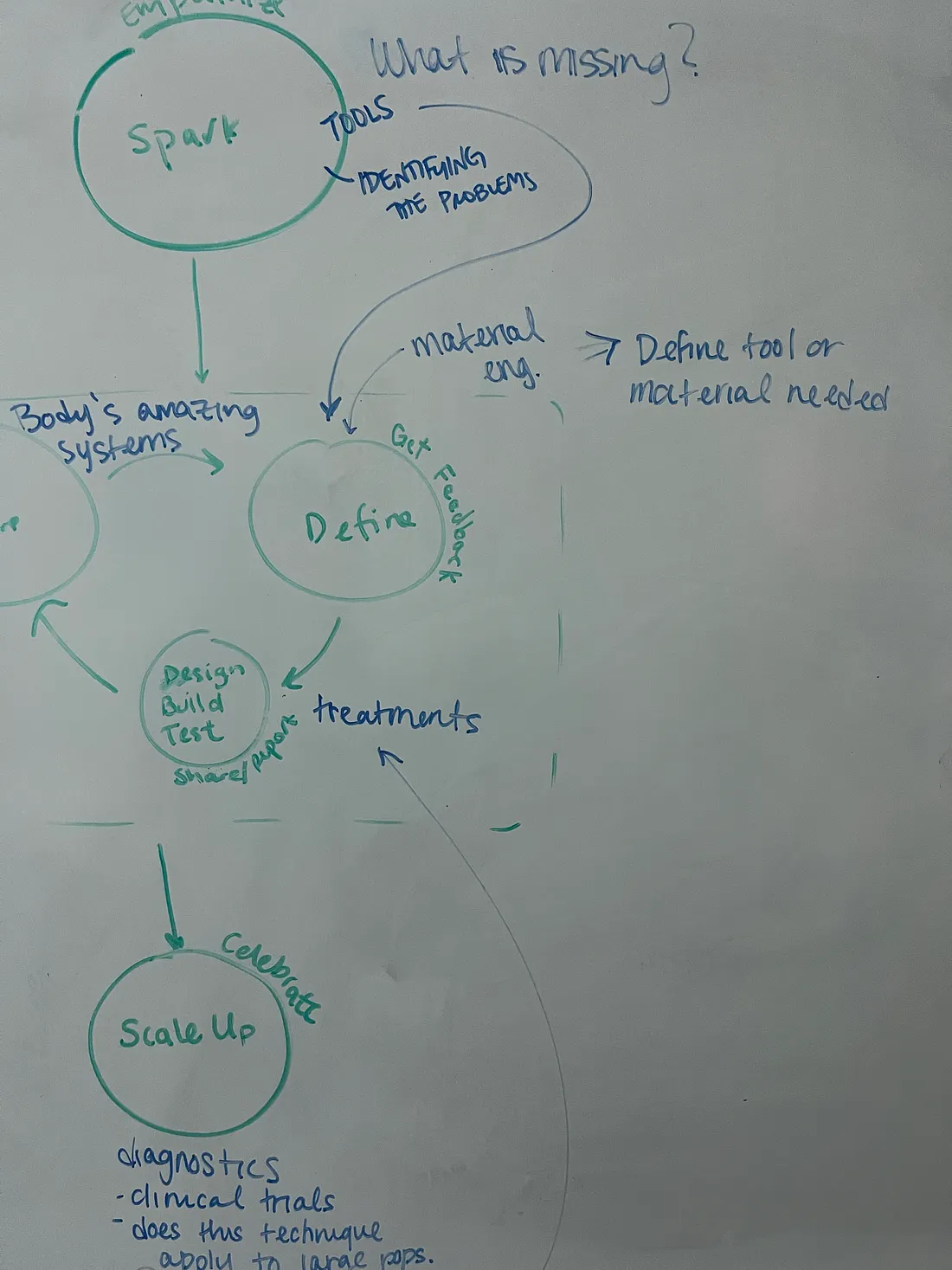
Over time, the cohort collectively recognized the need for greater structure, including scheduled shop time, clearer division of labor, and subgroups dedicated to specific exhibit strands. Once these elements were in place, participants reported a noticeable shift in momentum and confidence. This transition, from broad ideation to focused, hands-on prototyping, emerged as a critical inflection point. The interviews suggest that while conceptual exploration is an essential foundation, the most meaningful learning and progress occurred once students were able to test physical prototypes with real audiences and iterate based on observed use.
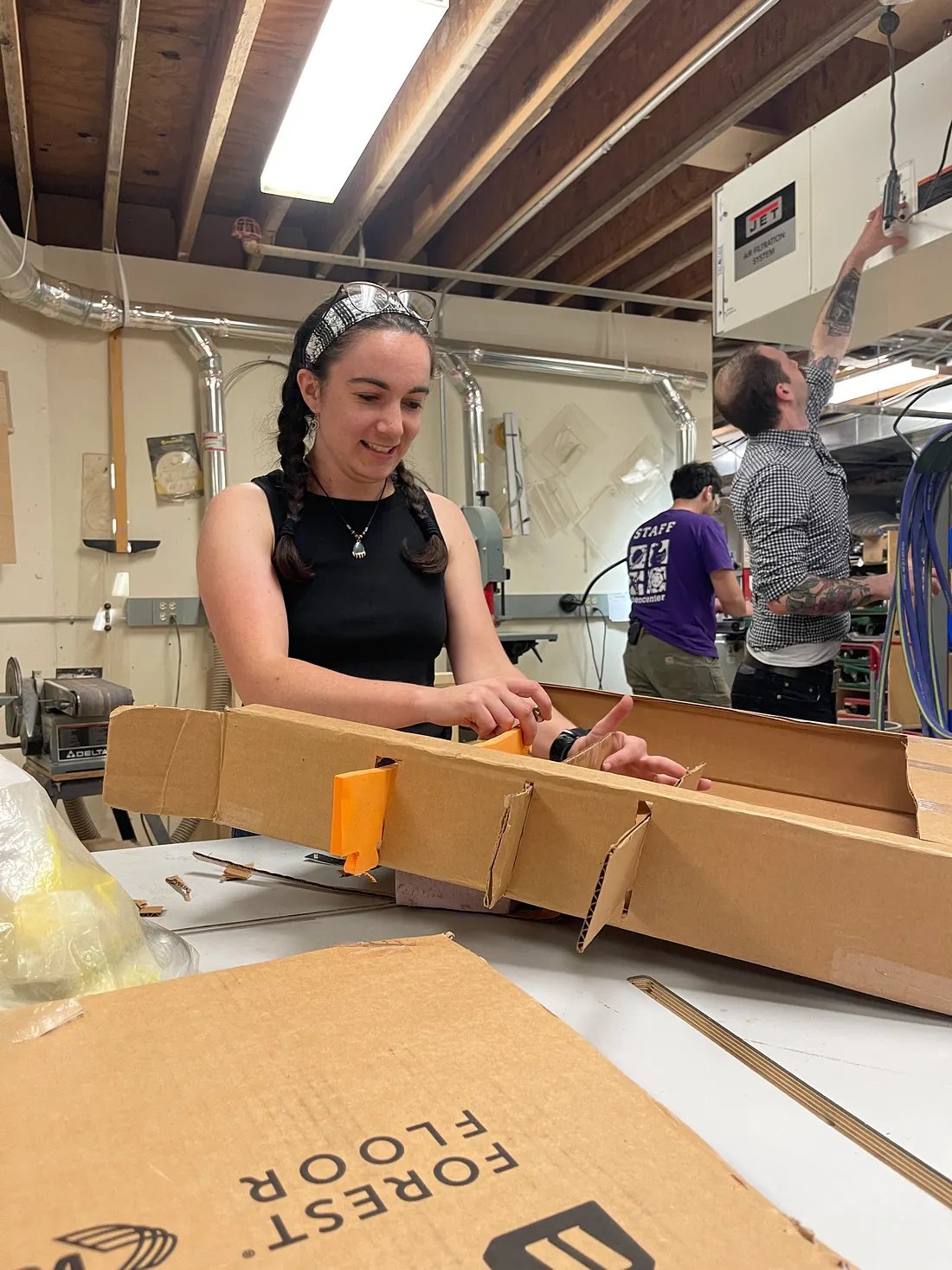
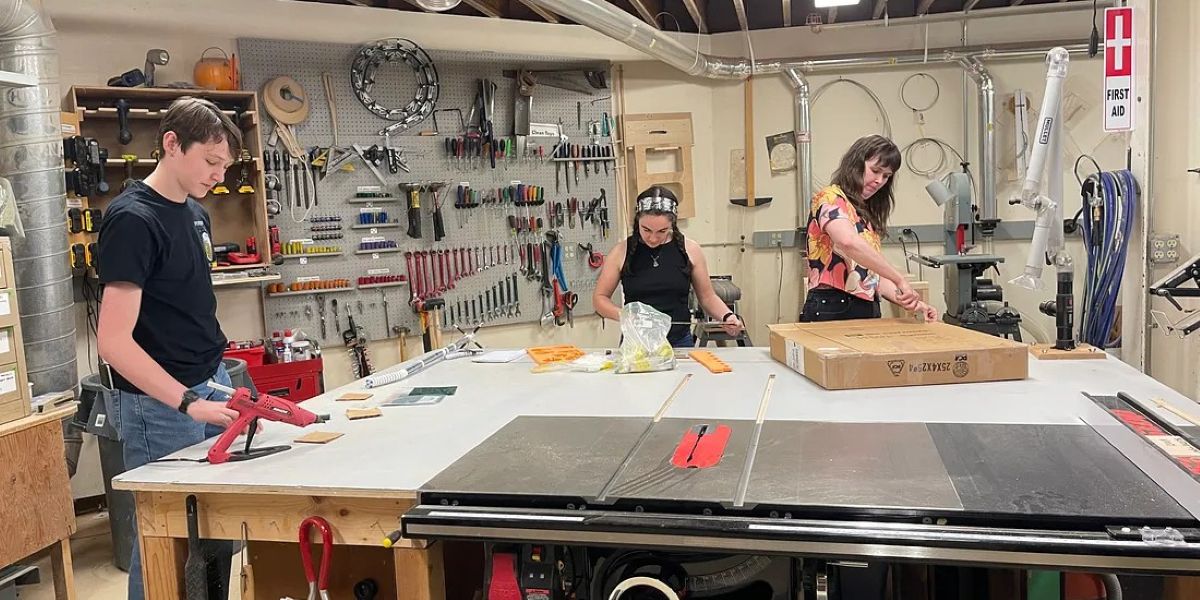
Moving from big picture group discussions, the students broke up into subgroups where each student would conceptualize and develop a unique exhibit concept that would help to communicate different, but complementary elements of BME.
Prototype exhibits
Diagnostics and Lateral Flow Assays
The diagnostics exhibit prototype was designed to introduce visitors to the concept of molecular diagnostics through an interactive model of a lateral flow assay, the same underlying technology used in many at-home tests (e.g., COVID or flu tests). At the core of the exhibit is a hands-on testing activity in which visitors manipulate objects representing “disease particles” and “antibodies.” Using magnets arranged in specific patterns, the exhibit demonstrates how correct matches bind strongly while incorrect matches fail to attach. Visitors are invited to test different samples, observe which ones are captured, and infer what that result means, mirroring the logic of diagnostic decision-making without requiring prior scientific knowledge. Within the broader gallery, this exhibit anchors the theme that biomedical engineers design tools that detect disease, often invisibly and behind the scenes, yet with enormous impact on health care decision-making.
Immunity and Vaccines
The immunity and vaccines exhibit prototype focuses on helping visitors understand how the immune system works and how vaccines interact with it, rather than promoting specific health behaviors. The exhibit is intentionally framed around biological mechanisms, recognition, response, and memory, rather than public health messaging, allowing families to engage with the topic in a low-pressure, exploratory way. Within the overall exhibition, this station highlights the role of biomedical engineers in understanding, designing, and improving immune-based technologies.
The Knee: Biomechanics and Tissue Engineering
The knee exhibit prototype is designed to communicate the idea that biomedical engineers “build” and improve the body, focusing specifically on joints, materials, and tissue engineering. Using the knee as a familiar and relatable body part, the exhibit introduces visitors to concepts of material properties, mechanics, and engineered tissues in a highly physical, hands-on way. The knee was intentionally chosen because it resonates across generations. Children often connect the exhibit to sports or movement, while adults and caregivers frequently reference personal or family experiences with injury or joint replacement. Within the larger exhibit narrative, the knee station reinforces themes of problem-solving, materials design, and engineering for quality of life.
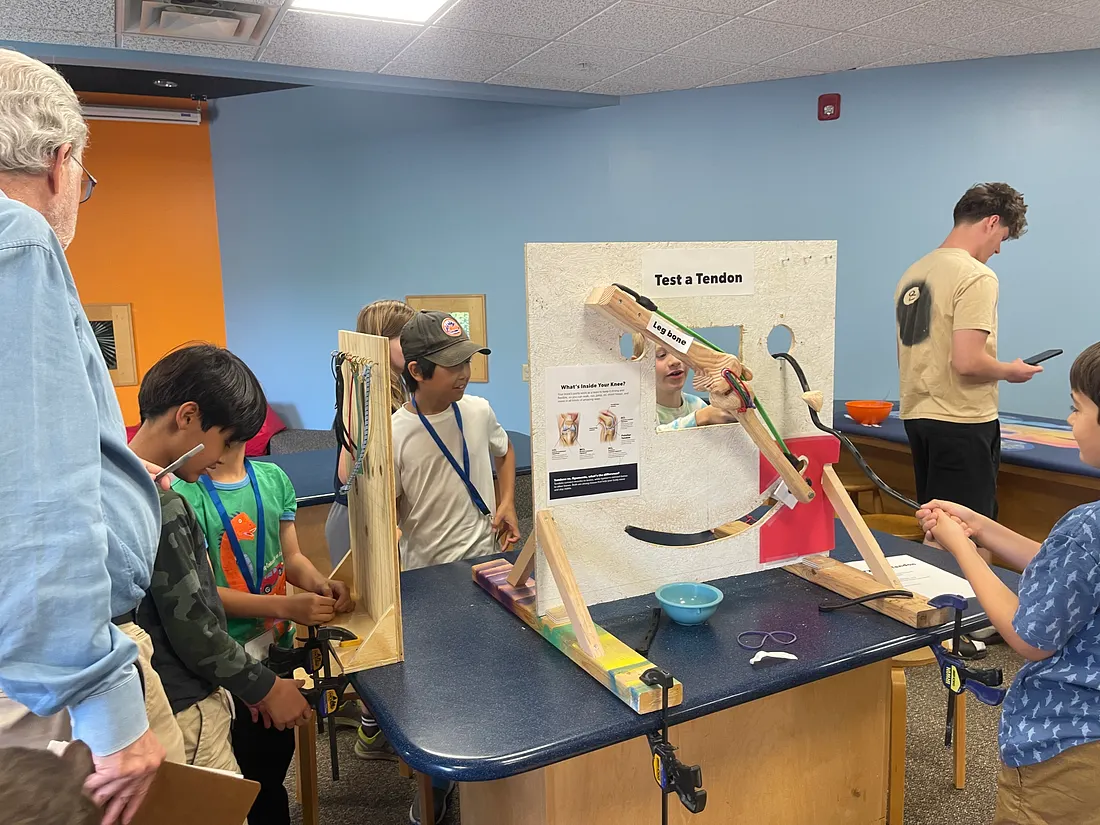
Together, the three exhibits formed a complementary set of experiences that showcased different dimensions of biomedical engineering. The diagnostics exhibit emphasized detection and information; the immunity and vaccines exhibit focused on biological systems and prevention; and the knee exhibit highlighted mechanics, materials, and physical design. While each exhibit can stand alone, collectively they convey that biomedical engineering is not a single activity or career path, but a diverse field in which engineers design tools, systems, and solutions that help people stay healthy, heal, and function better in everyday life.
Prototyping and evaluation with audiences
To help inform refinement of their respective exhibit prototypes, BME students participated in formative evaluation at a series of local Family Science Nights. These events were repeatedly identified as pivotal experiences. All three participants described Science Night prototyping as eye-opening, both in terms of how children and families interacted with the exhibits and in how quickly visitors’ behaviors revealed strengths and weaknesses in design. One of the most consistent findings across interviews was that visitors, especially children, were unlikely to read text-based explanations. Students discovered that a child’s level of engagement with the prototypes was based on an exhibit’s immediate intuitiveness, degree of kinetic or hands-on opportunity, and perceived level of fun. These realizations forced the students to confront a core tension resident in exhibit design between scientific accuracy and visitor engagement and enjoyment. Each student described learning that even the most carefully constructed conceptual model would fail educationally if it was not enjoyable or compelling to use.
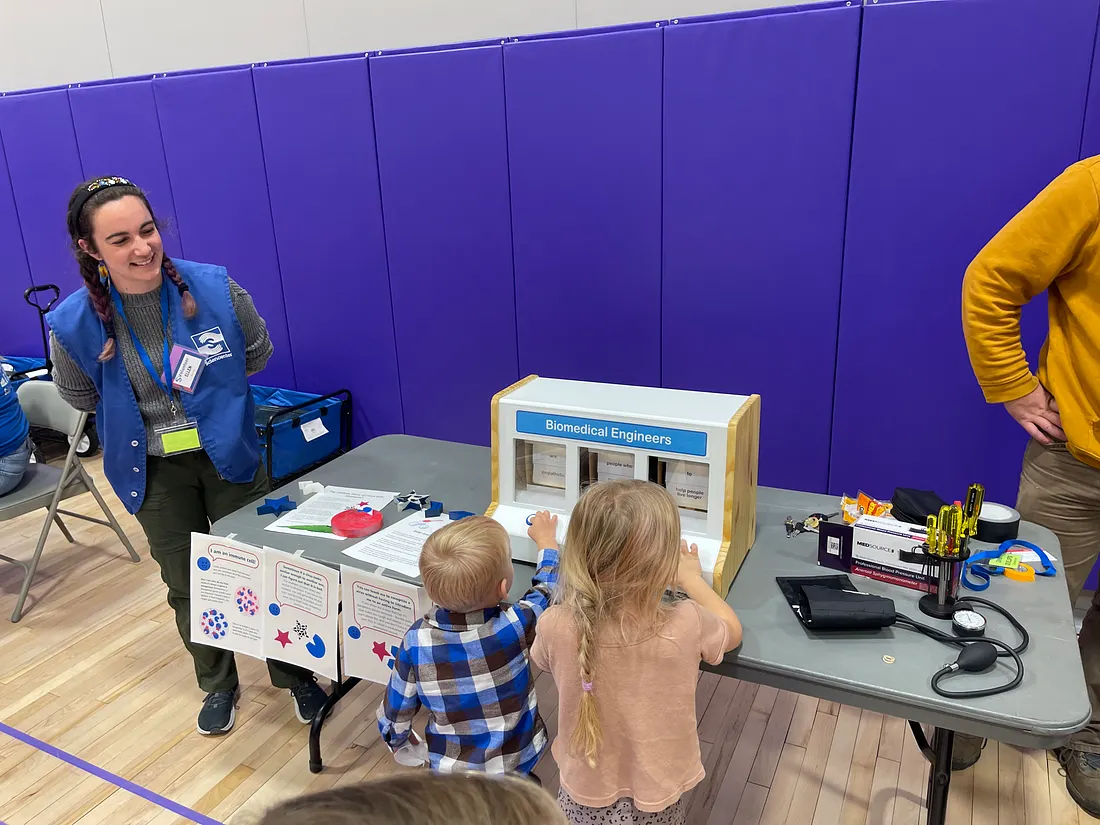
Lessons learned from prototyping manifested differently across the three exhibit strands. The diagnostics exhibit benefited from the inherently interactive nature of testing metaphors, but required careful adaptation for very young children who had little memory of COVID-era testing. This was addressed by using shape and magnet analogies and by leveraging parent involvement to scaffold explanations. The vaccines and immunity exhibit, by contrast, initially relied more heavily on narrative explanation and was therefore less engaging in interactive settings. It was noted that while parents were highly receptive to the initial exhibit design, often asking detailed questions about mRNA vaccines, children were less drawn to story-based interactions. This led to discussions about incorporating more tangible or digital elements to support engagement. The knee and tissue engineering prototype highlighted the challenge of making abstract material properties and biomechanics concepts both robust and playful. The student emphasized that durability and enjoyment were non-negotiable design constraints when working with young visitors.
I think I actually had really good reception from the parents. I didn’t encounter anybody that was mad that we were presenting content about vaccines. I think we tried to take it very much in a direction of this is how the immune system works and how vaccines work, like your immune system rather than a public health direction of you need to get vaccinated. I actually had a lot of parents ask me specifically about the mRNA vaccines and how those worked. I think I used the exhibit to explain mRNA vaccines to parents more than I did to kids. I think that for kids it was an approachable subject to ask, like, have you ever gotten a shot before? Do you know why you got that? I think it went over very well.
The knee prototype was getting at that idea that engineers build things and they solve problems and they come up with new solutions for things and it’s all targeted toward making people healthier, making people, feel better. So, it was my version that if we can build people new joints, then they’ll feel better. During prototyping we got feedback from that. The kids would come up and ask, what is this? We would start talking about it and then their parents or their grandparent would be like, oh yeah, do you remember grandpa had to have a knee replacement? And the kid’s like, oh yeah, I remember that. So, the exhibit and the conversation with adults helped make the exhibit more relatable for the kids.
I really enjoyed the family science nights. It’s fun seeing the kids interact with this stuff and learn how it all comes together. At one of the family science mates, there’s this girl probably in third grade, she was just wicked smart and curious about this whole thing. I asked if she recognized this and she was like, oh yeah, that’s the COVID test. After getting through the actual content of this thing, it was then fun to go further with her. Not wow can all tell that this isn’t a true lateral flow assay, but like, how does the exhibit work? How are the parts here doing what it does? So, she told me it all was like magnets. The disease one has magnets, the other ones don’t. I can stick things to both of them. I enjoyed taking that natural curiosity and pushing it as far as I can. That was super fun to do with some of the prototyping.
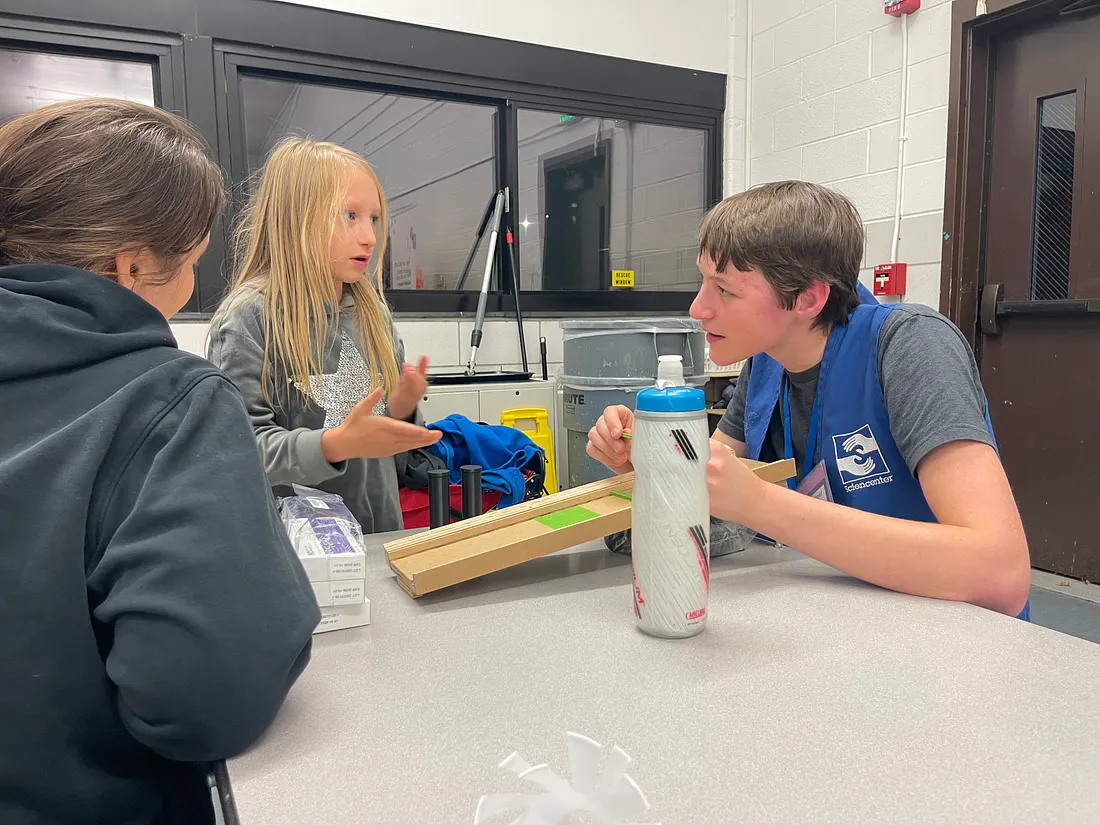
Despite exhibit differences in content and conceptual design, all three students concurred that engagement and enjoyment was the key to learning in informal environments. Focusing on scientific accuracy and conceptual clarity were viewed as necessary but insufficient for achieving engagement or enjoying with younger audiences. Without an immediate hook and multiple points of hands-on interaction, visitors would simply move on. This insight represented a significant shift from the BME students’ more traditional academic-based priorities and methods of communication, reflecting a meaningful shift in their thinking with respect to being able to communicate what they do and who they are as biomedical engineers to diverse audiences.
Personal and professional directions
With respect to their own personal professional development, all three students reported substantial growth in their ability to communicate complex ideas to non-expert audiences. They described learning to replace jargon with analogies, to adjust or modify explanations based on visitor response, and to view communication as a two-way process rather than as a more traditional one-way lecture style transfer of information. One student noted that having to distill BME research for children forced her to revisit fundamental BME concepts and ultimately helped deepen her own understanding of her own work.
I definitely think my communication skills improved with people that aren’t in my field of science. I feel like graduate school puts you in a lot of spaces where you communicate with people that do exactly what you do, and so you’re able to have very specific discussions. I think it was very helpful to learn how not to dumb information down, but rather to be able to explain it more effectively to a broader audience of all age groups. Family science nights were very helpful for that.
I think one the obvious benefits of this process is improved science communication; and particularly with non-experts and thinking about your work and thinking about your research in different ways from more of a design perspective rather than research science perspective. which I think is really important. It’s sort of like if a tree falls in the woods and no one’s around to hear it, did it make a sound? It’s like, if I do all this great work and no one knows about it doesn’t matter. I think something that was surprising to me that was valuable for me personally was doing all of the work to communicate the science and to connect to people from kids to adults.
For several participants, the project also offered an opportunity to engage with engineering in a way that contrasted with the intensity and abstraction of graduate research. Designing exhibits for children was described as refreshing and creatively energizing, providing opportunities to think about their work in more engaging, accessible, and human-centered terms rather than narrowly technical ones. This contrast appeared to sustain the students’ motivation over time, even as their own academic and research demands competed for attention. Students noted that this project offered something qualitatively different from typical graduate training opportunities.
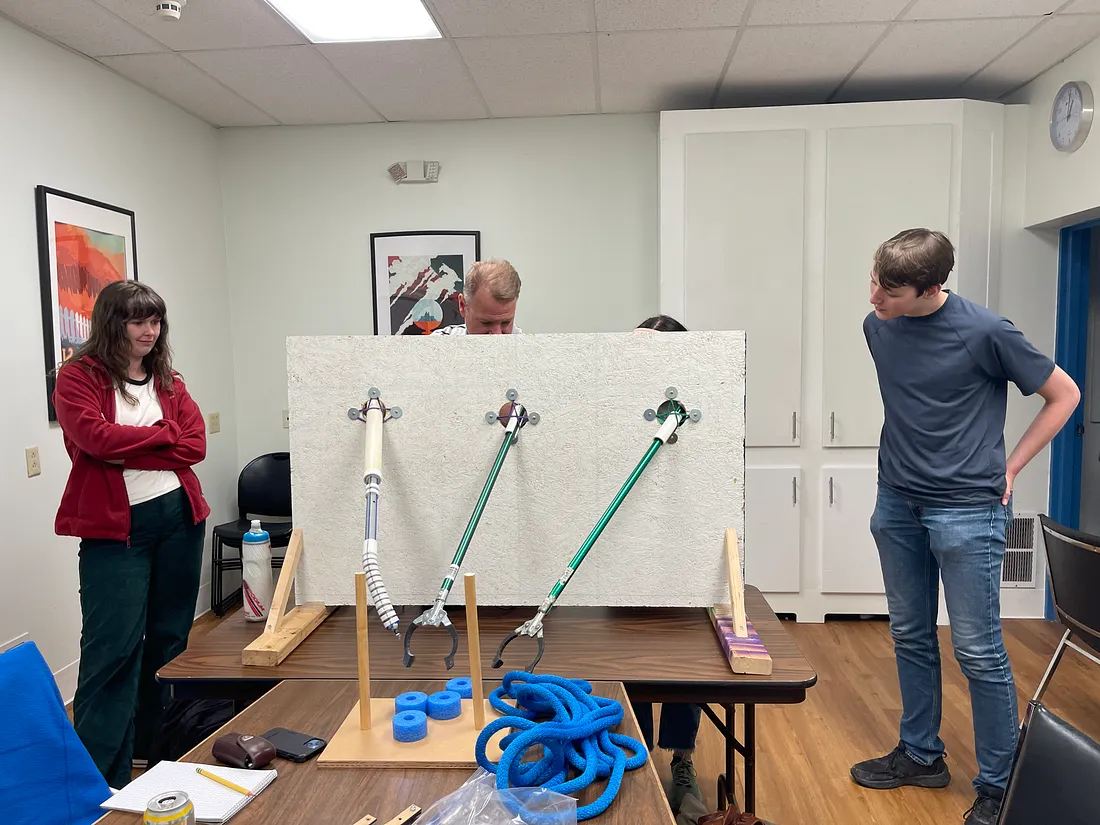
I think the most valuable aspect of the project and the collaboration aspect was having so many perspectives in the room. I think the field trip to the Carnegie Science Center and the Children’s Museum was really valuable. What do other museums do? What do they do well? What do they do not so well? How are they different? Getting perspectives from the graphic designers, from the exhibit designers, from all of the members of the team was really, really valuable. I think that aspect of it is what makes this really successful. It is really beneficial for everyone to look at the same thing from 10 different points of view and be like, oh yeah, I never thought about it like that.
The interviews also provide insight into how the project influenced participants’ professional identities and future trajectories. None of the students reported a dramatic career pivot as a direct result of the project, but all described reinforced or expanded interest in outreach, education, and public engagement. One interviewee noted newfound curiosity about museum exhibit design as a potential career path, while others envisioned continuing to integrate outreach and communication into industry or academic careers. Importantly, all three expressed a desire to remain involved with the project beyond their formal participation, either to support handoff to new cohorts or to continue refining exhibits. This willingness to stay engaged points to both the personal value participants derived from the work and the potential benefits of developing and encouraging cross-cohort continuation with the project.
I showed off one of my prototypes in a lab meeting. Everyone thought that it was pretty clever. Part of me has always had like a little bit of an interest in science education. I don’t think I want to be a college professor or anything like that. I do think I like solid hardcore engineering I probably will go into industry, but I know some of the bigger industries often have science outreach programs with the community. I think that would be cool to get in with. Maybe down the line I could see myself like teaching at a high school or middle school level, because I do think there’s definitely value in getting people excited and interested about science.
Next steps
As Year 2 of the project ends and Year 3 begins, our Year 2 cohort is passing the baton. For the Project Team, this involves multiple meetings over multiple days to help get the new cohort of graduate students up to speed on the project. Reflection and feedback are an important part of this process. The Sciencenter team leans on the graduate students to guide them on how to set the new cohort up for success and make a smooth transition. The transition into a new cohort also inevitably brings a change in workflow. As the cohort changes, so does the phase of the exhibition development process. This year, the new graduate student cohort will take ideas and prototypes at various levels of development and start to drill down into content and details to develop finalized exhibits.